


TL;DR:
Capitalism was built to capitalise on you — monetising your attention, your desires, your labour, your time, even your identity. This article explains how capitalism capitalises on people, warns how a failure to take control will steer you into its superficial traps, traces its historical roots, and offers practical steps to reclaiming ownership of your life.
Key Takeaways
- If you are not actively steering your life, you are being "wheeled along" by a system that views you not as a person, but as a product to be monetized.
- While the system of Capitalism offers benefits to all, it's inherently opportunistic, not fair.
- With Capitalism, dissatisfaction is a Feature, Not a Bug - The system requires you to be dissatisfied to function.
- Capitalism can be hacked - it isn't a villain to be destroyed, but a system to be mastered.
In this highly capitalistic world, even humanity is commoditized.
“The System” was built to profit from you—buts you can learn how to beat it. This blog explains what Capitalism is; what drives it; where it came from, and most importantly, how to beat it.
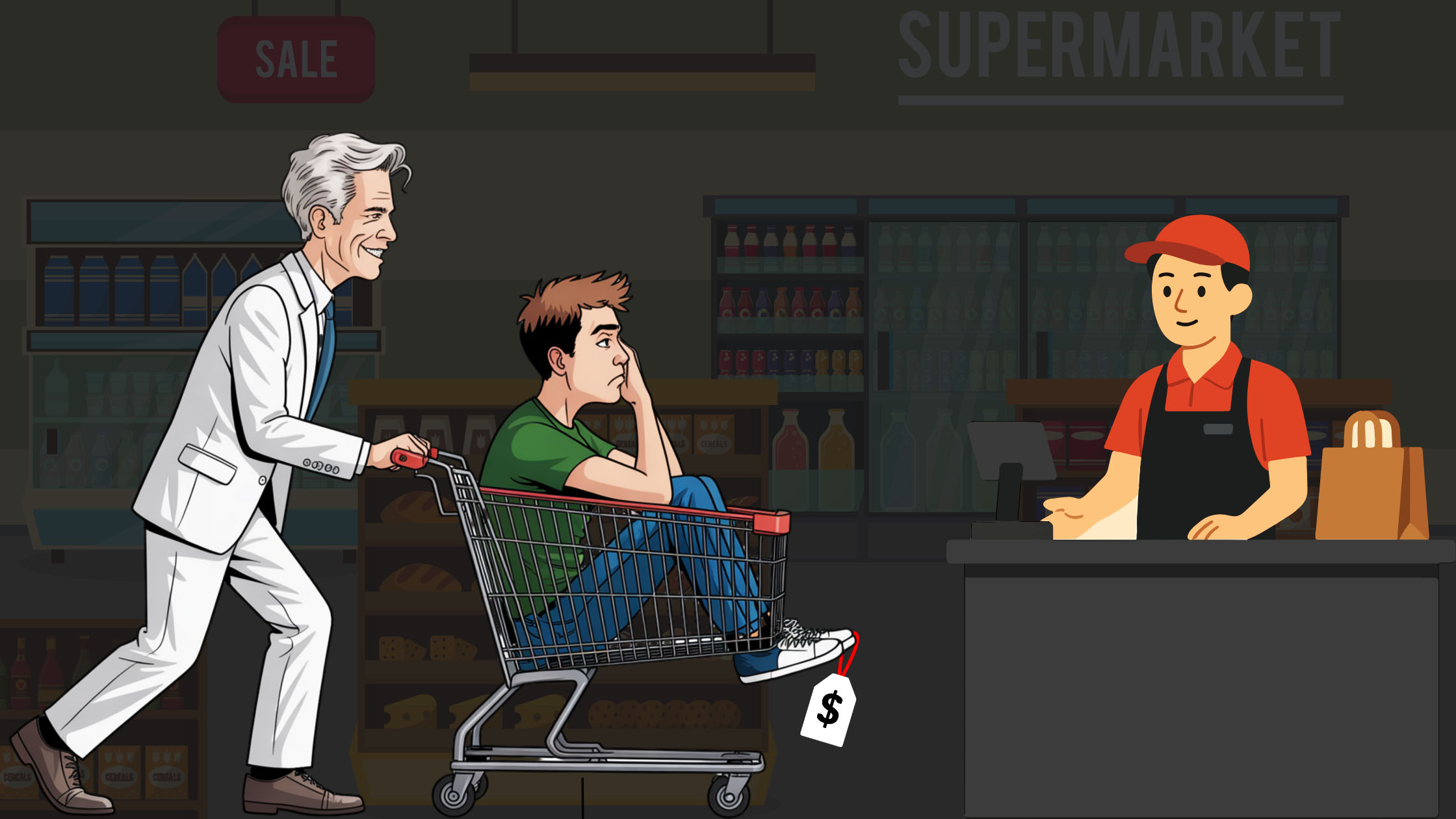
🛒 The Shopping Cart, the Man, and the Message
Take a long, honest look at the image above.
A young man in a green shirt sitting in a shopping cart — not pushing it, not directing it — simply being wheeled along. Behind him is an older man in a sleek, expensive all-white suit, complemented with an equally sleek full body of white hair, and a green tie — the embodiment of corporate power or wealth. He’s pushing the cart with intent.
Capitalism is going to Capitalise!
The reality, like the image, is striking — like a blow to the gut, or a slap in the face.
A bold reminder that if you’re not aware of how “the system” works, you’re not just in the cart — you are the product.
And unless you learn how capitalism capitalises, you’ll continue to be consumed by it while believing you’re in control.
But before we hit you with the negative consequences of capitalism, let’s define capitalism.
What Exactly Is Capitalism?
At its core, capitalism is an economic system where private individuals and businesses own the means of production — factories, resources, capital — and operate for profit. Goods and services are produced based on market demand, and prices are determined by competition and supply-and-demand dynamics.
In capitalism, individuals are free to:
- Start businesses
- Buy and sell property
- Earn profits
- Accumulate wealth
Sounds great, right?
In many ways, it is. Capitalism has fuelled innovation, created millions of jobs, and made global trade possible.
But here’s the twist…
Capitalism is not inherently fair. It’s inherently opportunistic.
How Capitalism Capitalises on Regular People
Let’s go back to the shopping cart.
Here’s how the system capitalises on you — if you’re not paying attention:
- You’re Taught to Chase, Not Question
From school to social media, you’re conditioned to consume and compete, not critically think or collaborate. - Time = Money. But Only Yours.
You trade hours for wages while others earn passively from investments, systems, and automation. - Your Data = Dollar Signs
In digital capitalism, you are the product. Your clicks, habits, and preferences are monetized daily. - You Finance Their Freedom
Credit cards, subscriptions, fast fashion — designed to keep you spending while the wealthy multiply your labor.
Why Capitalism Exploits People — Especially in the West
The Western side of the world (particularly the United States and UK) has taken capitalism to its extreme.
Here’s why it’s often exploitative:
1. Profit Over People
Everything — healthcare, education, housing, even clean water — is for sale. And when profits are prioritized over people, ethics become optional.
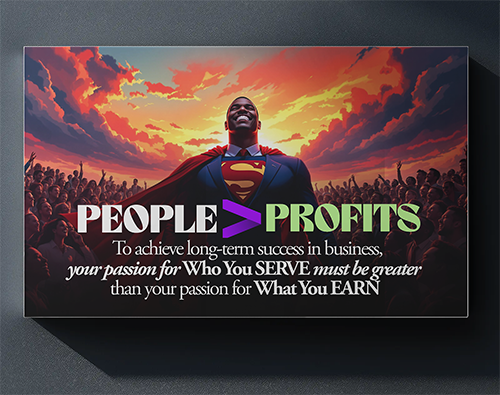
Do You Prioritize People over Profits?
If proper ethics is not optional for you, you might be interested in this wall art. Click the link below to view.
2. Wage Stagnation vs. Inflation
Due to inflation, wages aren’t commensurate with the cost of living. CEOs get bonuses, while workers are forced to pick up side gigs just to survive.
3. Consumerism as a Trap
Capitalism fuels desire. You’re constantly being sold something — the latest gadget, the next subscription, the new trend — all coming at an additional expense that most people can barely afford. And because of FOMO (Fear of Missing Out) many individuals’ lives become a treadmill of working to buy things that never make them feel whole.
But who created this monster? Where did it come from?
The bottom line — the system needs you dissatisfied. That’s how it traps you in a corner and exhorts you.
But who created this monster? Where did it come from?
Who Created Capitalism? A Brief History
Capitalism didn’t start with malls and billionaires. It evolved over centuries:

- 13th–16th centuries: Early capitalism emerged in Europe with trade routes and merchant economies.
- 17th century: The Dutch and British East India Companies pioneered global capitalism.
- 1776: Adam Smith, a Scottish economist, published The Wealth of Nations, widely seen as the blueprint for modern capitalism.
Smith argued for the “invisible hand” — the idea that individuals pursuing their own interest inadvertently benefit society. But did he envision global mega-corporations or Wall Street bailouts? We can’t know for sure.
But what we do know is, Capitalism wasn’t born a wild monster — it grew into one.
Pros and Cons of Capitalism
It’s easy to hate capitalism and believe it’s a scourge to society. But, like everything else in life, capitalism has its pros and cons.
PROS
✔️ Economic Growth and Wealth Creation: the profit motive of capitalism creates a powerful incentive for businesses to expand, invest, and create value.
✔️ Innovation: Competition is a core engine of progress in a capitalist system. This leads to a constant stream of new products, services, and technologies. ✔️ Consumer Choice (Freedom) and Quality: In a capitalist market, the consumer holds significant power. "Consumer sovereignty" means that businesses are ultimately guided by consumer demand. ✔️ Economic Freedom: Individuals are free to choose their own career path, start a business, decide where to invest their money, and choose what to buy. This economicCONS
❌ Wealth Inequality: A few win big while many fall behind.
❌ Worker Exploitation: Low wages and job insecurity plague many industries. ❌ Environmental Destruction: Profit-first thinking leads to overconsumption and ecological harm. ❌ Mental Health Impact: The pressure to produce and consume contributes to burnout, anxiety, and identity crises. ❌ Consumerism and Materialism: The system requires constant consumption to grow, which fosters a culture of materialism and consumerism. ❌ Market Failures and Monopolies: Competition is brutal, and successful firms naturally grow by buying or driving out competitors. This can lead to monopolies. ❌ Economic Instability and Business Cycles: Capitalist economies are historically prone to "boom and bust" cycles. ❌ Commodification of Essential Services: When everything becomes a commodity to be bought and sold, essential services like healthcare, education, and even water can become inaccessible to those who cannot afford them.So, Capitalism has its cons, but it isn’t all bad. Ask anyone living in a communist country where the means of production are owned communally.
💡 How to Stop Being Capitalised On
Here’s the nuance most people miss.
Capitalism isn’t the villain. It’s the system.

And like any system, it can be hijacked or hacked, like the Matrix.
Capitalism can be a tool for empowerment — if you know how it works and how to play the game differently.
It has helped many rise out of poverty, build businesses, and create freedom. But only when combined with:
- Ethics
- Regulation
- Financial literacy
- Awareness
Here’s how to capitalise on capitalism:
1. Think Critically
Challenge what you’re told to buy, chase, or desire. Ask: Do I want this — or was I programmed to?
2. Master Financial Literacy
Understand how money, taxes, debt, and investing work. Stop trading time for money. Start building assets.
3. Own Something
Own your labour. Your content. Your brand. Your skills. Ownership is power in a capitalist world.
4. Buy Intentionally
Support ethical brands. Buy less, but better. Spend in alignment with your values.
5. Unplug from Consumer Culture
You don’t need every upgrade. Find your worth beyond what you wear, drive, or post.
6. Build Communities, Not Just Careers
Capitalism isolates. Counter it with real connection, collaboration, and purpose.
🔚 The Final Thought: Don’t Be the Man in the Cart
If you’re not steering the cart, you’re just along for the ride — and guess what?
Someone else is pushing you… and profiting from it.
“Capitalism is going to Capitalise” is a stark reminder:
If you don’t define success for yourself, the system will do it for you — and sell it back to you with a mark-up and a barcode.
But here’s the empowering part:
You can flip the script.
You can opt out of the rat race and opt into conscious capitalism, ethical wealth-building, and soul-aligned living.
You can also opt to wear a satirical take on Capitalism as a daily reminder that the game is real, but you don’t have to be a pawn in it.
This premium crewneck t-shirt epitomizes the extent to which capitalism will go to capitalise.
🛒 Get Yours Now 👇

- Available in t-shirt, hoodie, crop top, and long sleeve sweater
- High-quality print that speak volumes
- Buy it. Gift it. Start the conversation.
This thought-provoking design is more than art. It’s a conversation starter, a wake-up call, and a statement.
Make a bold statement and start the conversation now.
And while you do so, keep this in mind — life is what you make of it. So, it’s either you capitalise on life, or life capitalises on you.
Topic Questions & Answers
In this article, “unplug” means intentionally reducing the ways capitalism extracts your attention, time and data — for example by limiting social media, reducing impulse purchases, reclaiming time from attention-harvesting products, and shifting toward ownership of skills and relationships. It’s a spin off from the adage “unplug from the matrix” – which means breaking free from societal norms, and control systems (like media, consumerism, or toxic relationships) to live more autonomously, and reclaim personal power.
Unplugging lowers impulse-driven spending, improves focus, and helps you make decisions based on values instead of algorithms. This will significantly reduce the chances of “the system” monetiszing your identity.
Start with three small actions: (1) Introduce a strict purchase rule for non-essentials. (2) Audit and cancel one subscription you don’t use. (3) Set a 30-day experiment to limit social feeds that influence impulsive buying. These small rituals build momentum toward greater autonomy.
Unplugging is selective — set clear communication boundaries, use productivity tools that you control (local docs, offline-first apps), protect deep-work windows (use schedule blocks), and use single-tasking techniques. Communicate expectations with co-workers about response times.
Not necessarily. Thoughtful and strategic unplugging emphasizes intentional presence — you replace exposure to constant shallow, superficial content with meaningful interactions.
Many people report improved focus and reduced anxiety within 1–2 weeks of setting consistent digital boundaries. Financial and habit changes (reduced impulse purchases, savings) may appear within 30–90 days.
Common traps include social friction with friends/colleagues, replacing one addictive habit with another, and overreaction (going cold-turkey then relapsing). The article recommends incremental experiments, social accountability, and setting realistic rules.
Examples:
- Morning no-screen hour.
- Single-task deep work blocks.
- Weekly subscription review.
- Scheduled “inbox only” times.
- Monthly “buy nothing” weekend.
Rituals transform intentions into stable habits.
Track monthly discretionary spend, number of subscriptions cancelled, minutes of focused work, and subjective measures (stress, sleep, meaningful social time). Small measurable wins keep motivation high.
Yes — the article promotes mindful, intentional use: buy less but buy better, use tools that respect privacy, and own the outputs you create (skills, content, side projects) instead of renting attention.
The article recommends connecting with local community groups, reading books on attention economics, following creators who model mindful tech use, and joining forums focused on conscious consumption.
You can join our community of deep thinkers – a place where deep thinking, truth-seeking, and personal growth take center-stage.
REFERENCES
Economic Policy Institute (EPI), Federal Reserve Bank of New York, Experian, The Wealth of Nations


